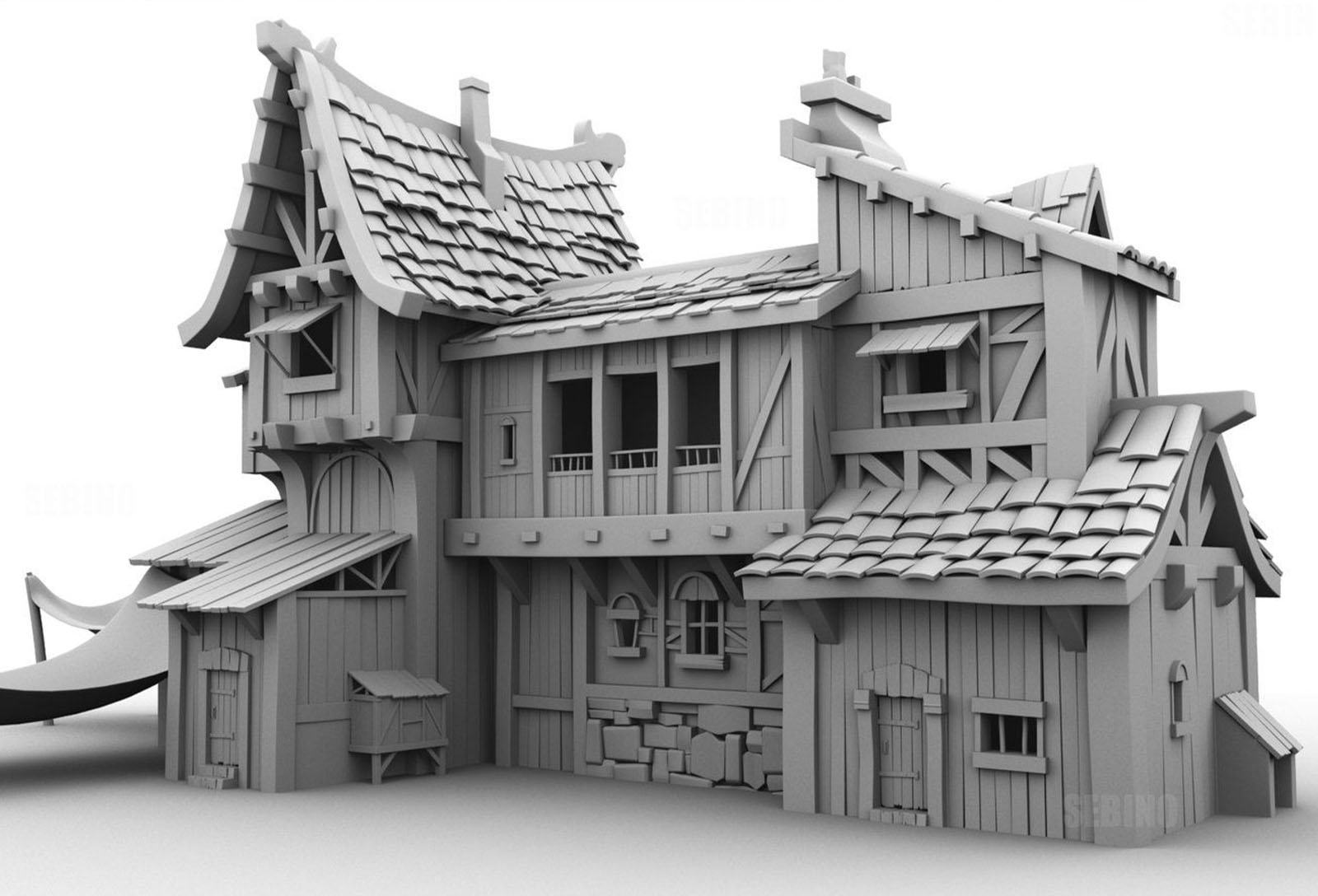
Approaches to 3d Modelling at the design thinking phase
It is ideal if designers begin to adapt to numerous 3D modeling approaches in order to complete even the most demanding 3D modeling projects.
For many years, 3D modeling was primarily employed in the television and advertising industries. However, as technology advanced, it had a significant impact on many fields, including architecture and design. Many 3D computer graphics applications were created in the 1990s, laying the groundwork for future great achievements (Paul, 2021). Even though digital technology is expanding nowadays, Computer Generated Imagery (CGI) especially 2D graphics, continue to dominate most design journals, websites, multimedia and other graphic design platforms used for communication. Many new artists and designers continue to use this approach since it is the quickest and easiest method to graphically convey and develop ideas. For high-quality production, 3D modeling, which involves the fabrication of three-dimensional objects using specialist software, is frequently employed.
A wide range of 3D modeling software is available to assist users in sculpting, texturing, and creating 3D models.
3D Modeling for Designers Graphic designers, who are into the creation of layouts, packaging or print designs, brand and logo designs, or anything else, lookouts for new methods to develop their talents. and 3D modeling could be one of the ways. It is vital to know that the employment market for both freelance 3D designers and those working locally is rapidly expanding. 3D renderings are currently required in industries such as manufacturing, health care, entertainment, media, and architecture (Ekaran, 2021). According to Emsi (2021), as reported by Ekaran (2021), a study found that the supply of employees proficient in 3D graphics isn't keeping up with demand, resulting in a significant number of entry-level roles for people with these skills to compensate for the market's employment gap. 3D modeling will grow more prominent as CGI gets more mainstream, and it is one of the most sought-after skills in recent days. This is because CGI or virtual reality items are frequently created utilizing 3D modeling and graphic design. Having 3D modeling skills allows designers to create intriguing visuals such as infographics with appealing 3D objects, animated graphics, cetera, which is difficult with merely graphic design. Most professionals, including CEOs, consultants, and even staff, prefer to convey their suggestions or ideas using visuals rather than papers since they are more visually attractive. Although there are distinctions between 2D and 3D modeling, both share certain features. The majority of the amazing designs that one may see are generally created using a combination of 2D and 3D modeling. A single artwork, for example, can be made by combining hand-drawn designs with 3D rendered pieces (Tarun, 2021). Thinking in three dimensions allow designers to be more creative when they are only into two dimensions. Learning 3D modeling is similar to learning a new instrument that requires a lot of practice and effort to fully perfect. Continuous study and practice when learning and improving in 3D eventually benefits a graphic designer's intellect. Learning 3D modeling might be complex. Many of the programs are sophisticated, and effective modeling concepts are founded on core artistic abilities. Those with drawing and sculpture skills will find it easier to learn to model. However, anyone with enough time and dedication may develop these talents (Petty, 2019).
Approaches/Methodologies to 3d Modeling
According to Magellan Solutions Outsourcing, Inc (2021), 3D modeling techniques generate 3D pictures of various things that are mathematically represented in three dimensions. An artist manipulates virtual space points to produce a collection of vertices that constitute an item. 3D objects can be produced automatically or manually by manipulating vertices. 3D modeling is the process of creating digital three-dimensional visuals. A wide range of 3D modeling software is available to assist users in sculpting, texturing, and creating 3D models. Sculpting: is the technique of shaping a material, such as stone or wood, by manipulation. Sculpting a model with software such as Mudbox, ZBrush, and others is very similar to working with a lump of clay in the real world — you can mold it into different forms, add or remove material, and add fine detail to the surface (Maxon, 2022). Texturing: is the process of controlling the look of your model's surface. Color, shininess, transparency, reflectivity, and even surface roughness and smoothness may all be adjusted (sessions college for professional design, 2019). The area of 3D modeling is as intriguing as it gets, allowing designers and artists to transform their ideas into 3D lifelike digital models. However, practically all designers have struggled to get their ideas around something so broad and demanding. There are as many different forms of modeling as there are tools. However, this paper restricts itself to addressing a few of the methods or strategies that are known to a little larger audience. There are various techniques to modeling in operation, but just a handful are addressed in this paper. These techniques appear to be widely acknowledged methodologies or styles of 3D modeling, and they are all feasible in some way (Selin, 2021).

P.T Moore
CEO/ Founder
to deliver the greatest creative and an everlasting branding experience for a client's customers/prospects